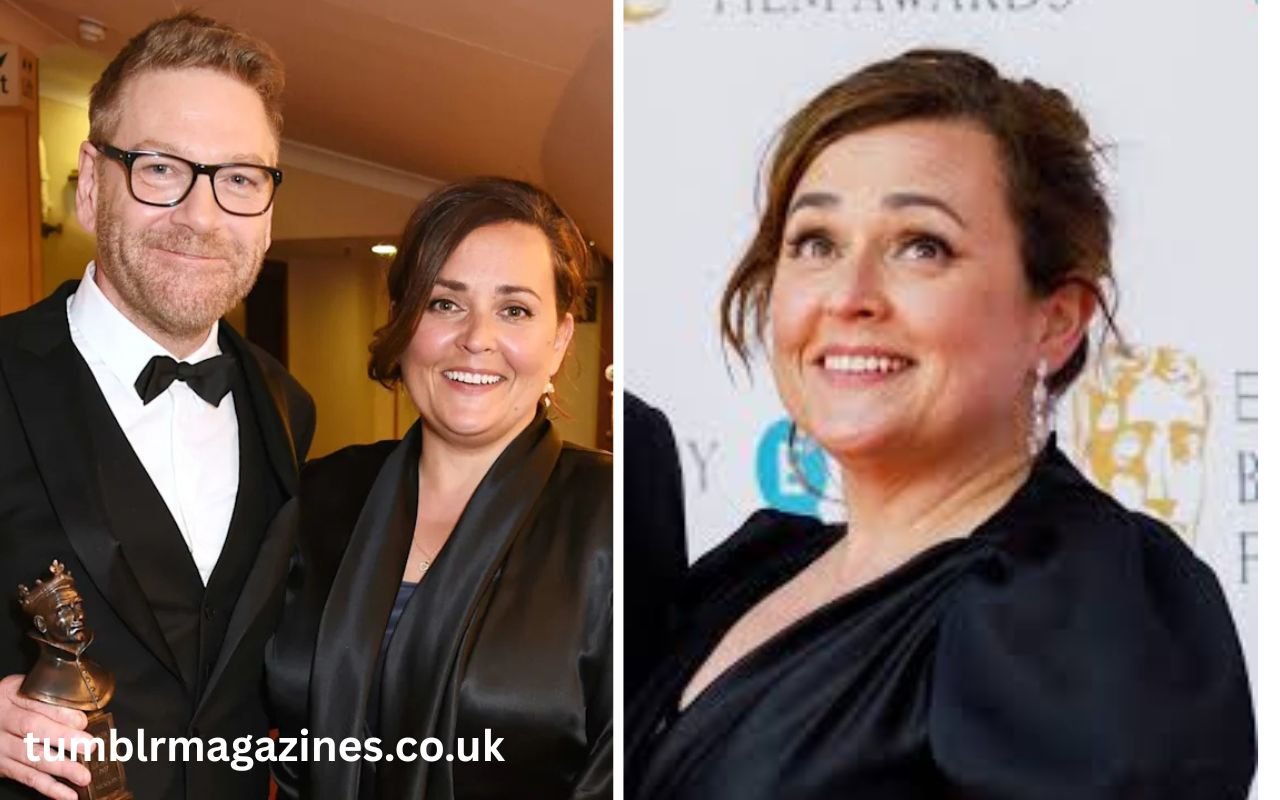
Lindsay Brunnock: The Art Director Who Captured Kenneth Branagh’s Heart
lindsay brunnock Lindsay Antonia Brunnock was born in 1970 in Cambridgeshire, England, into a family of considerable wealth and comfort. Her father, James Brunnock, was a successful businessman, and her mother, Margaret Brunnock, raised Lindsay in an environment that nurtured creativity and ambition. Growing up in the beautiful English countryside of Cambridgeshire, young Lindsay developed a deep fascination with art and cinema that would shape her entire future. She would often travel all the way to London just to look at movie posters and watch films, demonstrating an early commitment to her passion that most children her age did not share.
Her full name, Lindsay Antonia Brunnock, reflects her British heritage, and she holds British nationality with English ethnicity. The privilege of growing up in a business family meant she had access to culture and the arts from an early age, but it was her own drive that pushed her toward a career in the film industry. Unlike many children of wealthy families who might rest on their family’s success, Lindsay decided early on that she wanted to work behind the camera, specifically in the art department of film productions. This determination would lead her to pursue a path that combined her love for visual aesthetics with the practical demands of movie making, eventually establishing her as a respected figure in British cinema.
Educational Path and Early Artistic Influences
While specific details about Lindsay Brunnock’s formal education remain private, consistent with her notoriously discreet personal life, her career trajectory suggests a solid foundation in art and design. Her early teenage years were marked by an intense fascination with visual storytelling, and she spent countless hours studying film posters, set designs, and cinematic compositions. This self directed education, combined with whatever formal training she pursued after secondary school, prepared her for the competitive world of film production. Sources indicate that she attended school in Cambridgeshire before moving on to higher education, though she has never publicly named the institutions she attended.
What makes Lindsay’s story particularly inspiring is that she did not rely on connections or family wealth to enter the film industry. Instead, she started at the very bottom, working as part of crew teams and learning the trade through hands on experience. Her early twenties were spent absorbing every aspect of art direction, from prop selection to set construction, from color theory to historical accuracy in period pieces. This grass roots approach to learning her craft gave her an authenticity and practical knowledge that would serve her well throughout her career. The film industry is notoriously difficult to break into, but Lindsay’s combination of artistic talent, relentless work ethic, and genuine passion opened doors that might have remained closed to less dedicated individuals.
Career Beginnings and Rise in the Art Department
Lindsay Brunnock officially launched her professional career in 1996, a year that would mark the beginning of a steady ascent in the British film industry. Her first credited role was as an assistant designer for the mini television series ‘The Tenant of Wildfell Hall,’ a period drama that required careful attention to Victorian era details. That same year, she worked as the designer for the TV movie ‘The Moonstone,’ based on Wilkie Collins’s classic novel, further establishing her ability to handle literary adaptations with visual sensitivity. These early projects may not have been blockbusters, but they provided invaluable experience and demonstrated her reliability to producers and directors.
The late 1990s saw Lindsay’s career gaining momentum as she was promoted to assistant art director, a role that came with greater responsibility and creative input. She worked on ‘A Merry War’ in 1997, a comedy drama set in postwar London, followed by ‘The Governess’ in 1998, a film starring Minnie Driver that required detailed period settings. Her work on ‘This Year’s Love’ in 1999, a romantic comedy about six young people in Camden Town, showcased her versatility, as it was a contemporary piece that demanded a completely different visual language than her period work. The year 2000 brought ‘Born Romantic,’ another ensemble romantic comedy, proving that Lindsay could handle both gritty realism and lighter, more whimsical tones with equal skill.
Major Projects and Critical Recognition
The early 2000s represented the peak of Lindsay Brunnock’s active career in film production. In 2002, she worked on ‘The Abduction Club,’ a period comedy drama set in eighteenth century Ireland that earned critical acclaim specifically for its props, settings, and overall visual design. The film required meticulous attention to historical detail, from the costumes to the architecture to the smallest hand held objects, and Lindsay’s contribution helped bring that world to life convincingly. That same year, she served as art director on ‘Shackleton,’ an adventure mini series chronicling Ernest Shackleton’s harrowing 1914 expedition to the South Pole. This project was particularly significant not only for its production values but also because it would change her personal life forever.
The year 2003 was remarkably busy for Lindsay, with no fewer than four projects bearing her creative fingerprint. She contributed to the art department of the TV movie ‘Loving You,’ the comedy film ‘Bright Young Things,’ the TV series ‘The Last King,’ and the drama movie ‘Ready When You Are Mr. McGill’. ‘Bright Young Things,’ directed by Stephen Fry and based on Evelyn Waugh’s novel ‘Vile Bodies,’ was especially successful and became one of her most recognized works. Despite this flurry of activity, Lindsay chose to step back from full time filmmaking after 2003, though she would return for one final credited project. Her last work to date came in 2006 when she served as assistant art director for ‘Starter for 10,’ a coming of age comedy drama starring James McAvoy.
Meeting Kenneth Branagh and Their Love Story
Lindsay Brunnock first met Kenneth Branagh in 1997, but their initial interaction did not immediately lead to romance. At that time, Branagh was in a high profile relationship with actress Helena Bonham Carter, whom he had dated since 1994. Interestingly, it was Helena Bonham Carter herself who formally introduced Lindsay to Kenneth, unaware that this introduction would eventually lead to the end of her own relationship. Lindsay has confessed that she was instantly smitten with the charismatic actor and director, but she refrained from acting on her feelings or confessing anything as a matter of respect for his existing relationship. This restraint speaks volumes about her character and integrity.
It was only during the production of ‘Shackleton’ in 2002 that Lindsay and Kenneth grew closer. Working together on the challenging Antarctic expedition mini series, which starred Branagh in the title role, allowed them to develop a friendship that gradually deepened into something more romantic. By the time filming wrapped, Branagh’s relationship with Bonham Carter had ended, and he was free to pursue a relationship with Lindsay. They dated for about two years before deciding to marry. The wedding took place on May 24, 2003, in a private ceremony attended by close friends and family. Since then, Lindsay has become Branagh’s second wife, following his previous marriage to actress Emma Thompson from 1989 to 1995, and the couple has remained together for over two decades.
Life as Lady Branagh and Maintaining Privacy
Despite being married to one of the most famous actors and directors in the English speaking world, Lindsay Brunnock has managed to maintain an extraordinary level of privacy. Unlike many celebrity spouses who seek the spotlight or build their own public profiles, Lindsay has consistently chosen to remain behind the scenes. She does not maintain any social media accounts, rarely gives interviews, and is only seen publicly when accompanying her husband to film premieres, award ceremonies, or international shoots. This deliberate choice to stay out of the tabloids has earned her respect from those who value authenticity over attention seeking behavior.
The couple currently resides in Berkshire, England, where they live a relatively quiet life with their dogs. They have no children, and they have publicly stated that they would not like to raise children, a decision they have made together and maintained throughout their marriage. Instead, they focus on their careers, their shared love of cinema, and their companionship. Lindsay is often described as Kenneth’s rock, the steady presence behind his sometimes chaotic professional life. She continues to support his work, from his Shakespearean adaptations to his Marvel blockbuster ‘Thor’ to his Oscar winning film ‘Belfast,’ always remaining his most trusted confidante. In an industry known for short lived marriages and public breakups, the stability of the Branagh Brunnock union is a refreshing exception.
Net Worth and Financial Standing
As of 2024, Lindsay Brunnock’s estimated net worth stands at approximately 3million[citation:2][citation:7].Thiswealthhasbeenaccumulatedthroughhersuccessfulcareerasanartdirectorandassistantartdirectoronnumerousfilmandtelevisionprojectsthroughoutthelate1990sandearly2000s.Whilethisfigureissubstantial,itisconsiderablylessthanherhusband’sestimatedfortuneofaround60 million, which he has amassed through decades of acting, directing, producing, and screenwriting. The couple’s combined wealth allows them to live comfortably in their Berkshire home without financial concerns, but Lindsay has never appeared to be motivated by money or status.
In the United States, the average annual salary for an art director in the film industry is approximately 60,000,thoughtoptierprofessionalsonmajorproductionscanearnsignificantlymore[citation:2].Lindsay’searningsduringheractiveyearslikelyfellwithinorabovethisrange,particularlygiventhenumberofprojectssheworkedoninherbusiestperiods.Hernetworthof3 million reflects not only her salary but also wise financial management and possibly shared assets with her husband. What is most notable, however, is that she built her own career and her own wealth before and during her marriage to Branagh. She did not enter the relationship as a dependent, and her professional identity remains separate from his, a fact that she guards as carefully as she guards the rest of her private life.
Why Lindsay Brunnock Removed Herself from the Spotlight
Perhaps the most intriguing aspect of Lindsay Brunnock’s story is her decision to step away from active filmmaking after 2006, despite having reached a high point in her career. The year 2003 had been her most industrious and successful period, yet she chose to take a break that ultimately became permanent. Various theories exist about why she made this choice, but the most likely explanation is that she simply decided to prioritize her marriage and personal happiness over professional ambition. After years of grueling production schedules, late nights on sets, and the constant pressure of meeting deadlines, she may have welcomed the chance to step back and enjoy a different rhythm of life.
It is also possible that becoming Lady Branagh brought with it new social obligations and opportunities that she found more fulfilling than her previous work. Some sources suggest that she remains active in the arts in more informal capacities, perhaps consulting on projects or offering her expertise to emerging filmmakers without seeking official credit. What is clear is that she does not regret her decision. She continues to attend industry events alongside her husband, and she remains well regarded by those who worked with her during her active years. In a culture that often equates visibility with success, Lindsay Brunnock offers a compelling alternative: a talented professional who achieved recognition, built a respectable career, and then gracefully chose a quieter path when it suited her. Her legacy in British cinema may be modest in scope, but it is solid in quality, and her story reminds us that there are many ways to define a life well lived.