




tuileriengarten Garden: The Royal Heart of Paris Where History Breathes
tuileriengarten The story of the Tuileries Garden begins in the sixteenth century with a queen who longed for home. Catherine de’ Medici, the widow of King Henry II of France, decided to leave the Hôtel des Tournelles near the Bastille after her husband‘s accidental death in 1559. She moved her court to the Louvre Palace, but she found the space inadequate for her needs. In 1564, she purchased land just west of Paris, outside the old city wall of Charles V. This area had been occupied for centuries by tile-making factories, known in French as tuileries, which is exactly how the garden got its name . The new residence built there became the Tuileries Palace, and the garden was designed to accompany it.
Catherine commissioned a landscape architect from Florence, Bernard de Carnesse, to create an Italian Renaissance garden reminiscent of those she had known growing up in Italy . The original garden was an enclosed space measuring five hundred meters long and three hundred meters wide. It was divided into rectangular compartments by six alleys, with sections planted as lawns, flower beds, and small clusters of five trees called quinconces. There were also practical elements like kitchen gardens and vineyards. The garden featured fountains, a labyrinth, a grotto, and stunning faience images of plants and animals created by Bernard Palissy, whom Catherine had tasked with discovering the secret of Chinese porcelain . This was the beginning of a green space that would evolve into one of Paris’s most beloved landmarks.
André Le Nôtre‘s Grand Redesign in 1664
The Tuileries Garden as visitors experience it today owes its defining character to one man: André Le Nôtre. In 1664, King Louis XIV commissioned his chief gardener to completely redesign the Tuileries. Le Nôtre was the grandson of Pierre Le Nôtre, one of Catherine de’ Medici‘s original gardeners, and his father had also tended these grounds . With this deep family connection to the land, Le Nôtre set about transforming the Tuileries into the finest example of the French formal garden, or jardin à la française. His style was based on symmetry, order, and long, dramatic perspectives that were meant to be viewed from above, from a palace terrace or upper windows.
Le Nôtre eliminated the street that had separated the palace from the garden and replaced it with a terrace overlooking carefully designed flowerbeds bordered by low boxwood hedges. In the center of these flowerbeds, he placed three ornamental lakes with fountains. He laid out the Grande Allée, which extended for three hundred and fifty meters, and built two other chestnut-lined alleys on either side . On the south side of the park, next to the Seine River, he built a long terrace called the Terrasse du bord de l‘eau, planted with trees to offer beautiful views of the water. On the north side, he created the Terrasse des Feuillants. At the western end of the garden, he designed two horseshoe-shaped ramps overlooking a magnificent octagonal lake that measures sixty meters in diameter and features a central fountain with a water jet reaching twelve meters high. This layout became the blueprint for the garden and established the Parisian historical axis that runs from the Louvre to the Arc de Triomphe and beyond.
From Royal Privacy to Public Park
For more than a century, the Tuileries Garden was a private playground for French royalty. Young Louis XIII used it for hunting and kept a small zoo of exotic animals there . However, in 1667, a significant change occurred. At the request of Charles Perrault, the famous author of Sleeping Beauty and other beloved fairy tales, the garden was opened to the public . This made the Tuileries the first royal garden in France to be accessible to ordinary people, though beggars, lackeys, and soldiers were still excluded. The garden quickly became a fashionable place for the nobility to stroll and socialize. The daughter of Gaston, Duke of Orléans, known as La Grande Mademoiselle, held court in a section called the Parterre de Mademoiselle until she was expelled for supporting a rebellion against her cousin, the young Louis XIV .
The French Revolution brought even more dramatic changes to the Tuileries. On August 10, 1792, a mob stormed the Tuileries Palace, and the king‘s Swiss Guards were chased and massacred in the garden . The monarchy fell, and the garden was renamed the National Garden. It became a public park in the truest sense, open to all citizens without restriction. In 1871, during the Paris Commune, revolutionaries set fire to the Tuileries Palace as a symbol of royal and imperial power . The palace burned for days and was eventually demolished in 1883, leaving only the garden behind . Since that time, the Tuileries Garden has stood alone as a public green space, no longer attached to any royal residence. It covers approximately twenty-five to twenty-eight hectares, depending on the source, making it one of the largest parks in central Paris .
An Open Air Museum of World Class Sculpture
Walking through the Tuileries Garden is like strolling through an art gallery without walls. The garden holds more than two hundred statues, vases, and sculptures, earning its reputation as an open air museum . The collection includes works by some of the most celebrated sculptors in French and world history. Visitors can find pieces by Aristide Maillol, whose robust, simplified female figures are scattered throughout the grounds. Auguste Rodin, the father of modern sculpture, is represented with works including The Kiss and Eve . Alberto Giacometti’s distinctive elongated figures also stand among the trees, creating striking contrasts with the formal geometry of the garden. Henry Moore‘s abstract bronze forms add a modern touch to this historic setting.
Many of the sculptures have fascinating stories behind their placement in the garden. In the 1960s, French President Charles de Gaulle ordered the removal of many nineteenth century statues from the Place du Carrousel, replacing them with contemporary works by Maillol . This decision sparked debate but ultimately brought fresh energy to the garden. In 1998, President Jacques Chirac added works by Jean Dubuffet, Germaine Richier, and David Smith . Around the year 2000, even more contemporary pieces were installed, including works by Magdalena Abakanowicz, Louise Bourgeois, Tony Cragg, and Roy Lichtenstein . The twelve statues surrounding the large octagonal pond are particularly notable, each depicting figures from ancient mythology and fables . Whether you are an art lover or a casual visitor, the sculptures of the Tuileries offer endless opportunities for discovery and contemplation.
The Octagonal Pond and Relaxation Areas
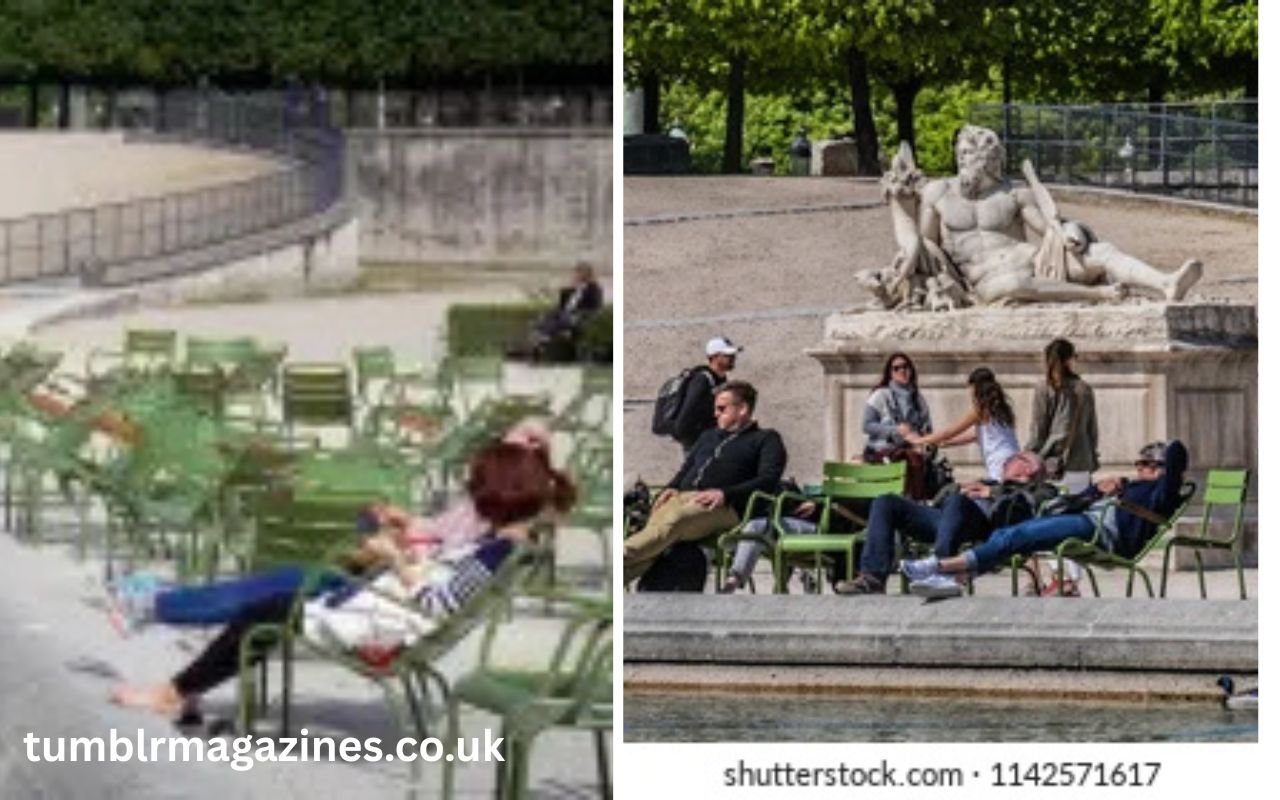
At the heart of the Tuileries Garden lies its most beloved feature: the large octagonal pond. This grand basin sits at the western end of the garden, surrounded by terraces that offer elevated views of the water and the surrounding greenery. The pond features a central fountain that sends water jets into the air, creating a soothing background sound that masks the noise of the city. Wild ducks often swim on the surface, adding a touch of wildlife to this urban oasis . Around the edge of the pond, visitors will find rows of lightweight, movable green chairs that have become an icon of Parisian park culture. These chairs can be rearranged freely, allowing visitors to sit in the sun or move into the shade as they prefer.
Sitting by the octagonal pond is one of the quintessential Parisian experiences. Locals and tourists alike spend hours here reading books, having conversations, watching children play, or simply doing nothing at all. The practice of leisurely sitting in public gardens is deeply embedded in French culture, and the Tuileries offers one of the finest settings for this pastime. From the chairs around the pond, visitors can look west toward the Place de la Concorde and the Arc de Triomphe beyond, perfectly aligned along Paris‘s historical axis. Looking east, the Louvre Museum rises in the distance. This central location makes the pond a perfect spot to rest between museum visits or after a long day of sightseeing. Many visitors return to the same chair day after day, forming quiet attachments to their preferred spots near the water.
Family Activities and Children’s Entertainment
The Tuileries Garden is not only a place for quiet contemplation but also a destination for family fun. For over one hundred and seventy years, children have been sailing little boats on the octagonal pond. This tradition dates back to 1850, and it remains one of the most charming activities in the park . For six euros, children can rent a colorful sailboat and use a long stick to guide it across the water. The sight of these small vessels drifting across the grand basin is a beloved image of Parisian childhood. Young princes Louis XIII and Louis XV once played in these same gardens centuries ago, and today the laughter of ordinary children fills the same spaces .
Near the Castiglione entrance on the north side of the garden, families will find a free playground that opened in 2015. This area includes slides, swings, roundabouts, and a beautiful rope bridge nestled among the trees above a bed of blue flowers . For a small fee, children can also enjoy a brightly colored carousel that evokes the magical universe of Charles Perrault‘s fairy tales. Trampolines are available for children aged two and older, set in an area bordered by palm trees that adds an exotic touch to the Parisian landscape . These activities are spread throughout the northern section of the garden, near the Rue de Rivoli. During summer months, the garden also hosts the Fête des Tuileries, a seasonal fair with additional rides and attractions . Whether you are traveling with toddlers or teenagers, the Tuileries Garden offers enough entertainment to keep the whole family happy for hours.
The Louvre’s Living Annex and Seasonal Events
The Tuileries Garden is officially part of the Louvre Museum estate, and the two institutions maintain a close relationship . The garden serves as a kind of living annex to the museum, extending the cultural experience beyond the walls of the former palace. The flower beds are often redesigned to complement current exhibitions inside the Louvre. For example, when the museum hosted a season dedicated to Dutch art, the gardeners planted serpentine patterns of multicolored tulips . Summer displays have featured daisy themed beds inspired by the artistic influences of King Francis I. This dynamic relationship between gardening and fine art makes each visit to the Tuileries unique, as the plantings change with the seasons and the exhibitions.
The garden also hosts a variety of guided events throughout the year. From April to November, on weekends and holidays, visitors can join guided walks led by Louvre staff members who share the secrets and stories of the garden . Drawing workshops take place every other Saturday morning, allowing participants to sketch the landscape and sculptures. Storytelling sessions for children are offered on Sunday mornings, featuring tales inspired by the garden‘s history and its connection to Charles Perrault. There are even cultural jogging tours for those who want to combine exercise with art history . In 2024, the Tuileries Garden achieved global recognition when it hosted the Olympic cauldron during the Summer Olympics and Paralympics . This honor placed the garden at the center of world attention, confirming its status as one of the most iconic parks on Earth.
Practical Information for Your Visit
Planning a visit to the Tuileries Garden is simple, as it is located in the absolute center of Paris. The garden stretches between the Louvre Museum to the east and the Place de la Concorde to the west, in the first arrondissement . Several metro stations provide easy access, including Tuileries on Line 1 and Concorde on Lines 1, 8, and 12 . The garden is also within walking distance of many major attractions, including the Champs-Élysées, the Orsay Museum, and the Grand Palais. River cruise boats dock along the Seine just south of the garden, making it a convenient stop for tourists exploring the city by water.
Admission to the Tuileries Garden is completely free throughout the year . The opening hours change with the seasons, so it is wise to check before you go. From April, May, September, and October, the garden is open from 7:00 AM to 9:00 PM. During the summer months of June, July, and August, the hours extend to 7:00 AM until 11:00 PM. From January through March and November through December, the garden opens at 7:30 AM and closes at 7:30 PM . Visitors are asked to leave the grounds thirty minutes before closing time. Two small museums are located within the garden grounds. The Musée de l‘Orangerie at the southwest corner houses Claude Monet’s famous Water Lilies murals in specially designed oval rooms . The Jeu de Paume museum at the northwest corner focuses on photography and contemporary image making . Both are worth visiting before or after your stroll through the garden.
The Garden‘s Biodiversity and Environmental Role
Beyond its beauty and history, the Tuileries Garden plays an important environmental role in central Paris. More than three thousand trees grow within the grounds, providing habitat for over thirty species of birds . Among these avian visitors are protected species such as the European sparrowhawk, the grey heron, and the grey wagtail . The garden serves as a vital stepping stone, or ecological corridor, between the Bois de Vincennes to the east and the Bois de Boulogne to the west. Birds rest and feed here as they travel along the Seine River corridor. The different sections of the garden, including the open lawns of the Grand Carré, the dense woodland of the Grand Couvert, and the limestone basin of the Octogone, each support different types of wildlife .
Since 2023, the Louvre Museum has been conducting formal inventories of the flora and fauna within the Tuileries Garden. This research aims to identify and protect the wild species that call this urban park home. The biodiversity surveys have revealed a surprisingly rich ecosystem hidden in plain sight. While visitors come to admire the sculptures and the fountains, a parallel world of insects, birds, and small animals thrives among the trees and flower beds. This ecological dimension adds yet another layer of significance to the Tuileries Garden. It is not merely a historic monument or a tourist attraction but a living, breathing part of the Parisian environment. The careful maintenance of the garden balances public access with ecological preservation, ensuring that future generations can enjoy both the cultural and the natural treasures of this remarkable space.