




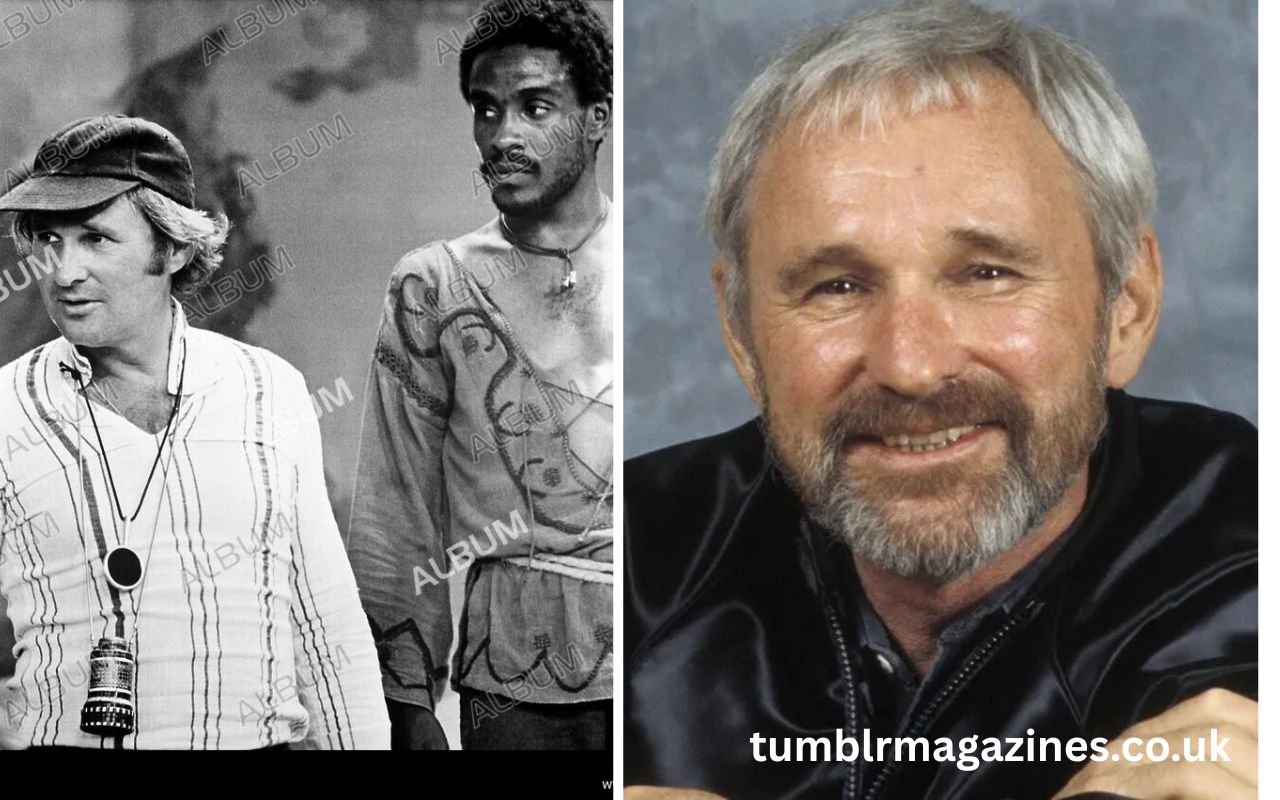
jesus christ superstar norman jewison Jesus Christ Superstar: The Rock Opera That Changed Biblical Cinema Forever
jesus christ superstar norman jewisonNorman Jewison was never a director who played it safe. Before he took on Jesus Christ Superstar, he had already proven his range with films like In the Heat of the Night, which won the Academy Award for Best Picture, and The Cincinnati Kid, a tense gambling drama. He was also finishing Fiddler on the Roof, another stage-to-screen adaptation that required a delicate touch with religious and cultural material. It was during the filming of Fiddler on the Roof that Jewison first encountered the concept album for Jesus Christ Superstar. Actor Barry Dennen, who voiced Pilate on the album, played it for Jewison on set, and the director was immediately captivated by the raw energy of Andrew Lloyd Webber and Tim Rice’s rock opera .
Jewison saw something in the musical that others had missed. While many religious figures initially condemned the project for its human portrayal of Jesus and its rock and roll score, Jewison recognized it as a powerful meditation on fame, betrayal, and sacrifice. He began drafting the script with lyricist Tim Rice, but the two eventually parted ways creatively. Rice envisioned an epic, large scale production, while Jewison wanted something more intimate and abstract. Jewison’s winning idea was to frame the film as a traveling troupe of performers arriving in the Israeli desert to put on a show. This framing device allowed him to avoid the traps of traditional biblical epics while keeping the focus squarely on the music and the characters .
The Grueling Search for Jesus and Judas
Casting the right actors for Jesus and Judas was the most critical decision Jewison had to make. He considered a staggering list of rock legends for the role of Jesus, including Mick Jagger of the Rolling Stones, John Lennon and Paul McCartney of the Beatles, Robert Plant of Led Zeppelin, and Barry Gibb of the Bee Gees . Each of these names would have brought massive star power, but Jewison worried that their existing fame would distract audiences from the story. He needed someone unknown enough to disappear into the role but talented enough to carry the film’s emotional weight. A young John Travolta, only seventeen years old at the time, also auditioned for the part of Jesus and was rejected .
Ultimately, Jewison turned to Ted Neeley, a Texas born singer and actor who had been understudying the role of Jesus on Broadway and in Los Angeles. Neeley had already appeared in the film adaptations of Hair and The Who’s Tommy, making him one of the few actors to star in the first two rock operas ever put to film . For the role of Judas, Jewison took a chance on Carl Anderson, another Broadway understudy who had taken over the part in Los Angeles. Neither Neeley nor Anderson were household names, but their chemistry and vocal power convinced Jewison they were the right choices. Yvonne Elliman, who had played Mary Magdalene on the original concept album and on Broadway, also reprised her role for the film .
Filming in the Israeli Desert Under Brutal Conditions
When Jewison decided to shoot Jesus Christ Superstar on location in Israel, he committed to a production that would be physically grueling for everyone involved. The film was shot across more than twenty different locations in Israel, including the caves of Beit Guvrin National Park, which served as the backdrop for songs like What’s the Buzz?, Strange Thing Mystifying, and Everything’s Alright . The decision to film in the actual Holy Land gave the movie an authenticity that no soundstage could replicate. The dry heat, the rocky terrain, and the ancient architecture all contributed to the film’s unique visual identity. However, that authenticity came at a steep physical cost.
The cast and crew faced extreme desert conditions that required constant attention to their health. Actors were required to hydrate every twenty minutes to prevent heatstroke and dehydration. Huge, multicolored blocks of ice had to be brought in from Tel Aviv just to keep everyone functional . Despite these hardships, the location also provided unexpected gifts. All the wind shots in the film were achieved using natural wind, with no machines required. The wind sweeping through the desert became an invisible character in the film, adding a layer of organic drama that could never be artificially manufactured. Between takes, the cast maintained their spirits by playing volleyball, dividing themselves into Team Jesus and Team Judas for friendly competition .
Ted Neeley’s Unforgettable Performance and Enduring Legacy
Ted Neeley brought a raw, vulnerable energy to the role of Jesus that has never been duplicated. His Jesus is neither a distant divine figure nor a mere hippie prophet. Instead, Neeley portrays a man burdened by the weight of his own destiny, someone who knows what is coming but still struggles with fear, doubt, and exhaustion. The film’s most intense sequence, The Temple, required Neeley to channel explosive rage as Jesus smashes the tables of the money changers. Jewison managed only two takes of this scene before the production ran out of unbroken props, thanks to Neeley’s unrestrained physical commitment . That kind of dedication defined his approach to the role.
Neeley’s association with Jesus Christ Superstar did not end with the 1973 film. In fact, it was only the beginning. Over the course of his career, Neeley has performed the role of Jesus more than five thousand times in North American and European tours . As of 2026, Neeley is still actively celebrating the film’s legacy. He is currently on a nationwide farewell tour, making special appearances at screenings of a remastered version of the film. One of the final stops on this tour will be at the George Eastman Museum in Rochester, New York, on August 4, 2026, where Neeley will introduce a screening made from rare 70mm elements . For fans of the film, these farewell appearances are a last chance to see the original Jesus in person.
Carl Anderson’s Judas: The Tragic Heart of the Film
Many critics and viewers have argued that Carl Anderson’s Judas Iscariot is the true protagonist of Norman Jewison’s film. Anderson came to the role with a powerful singing voice and a commanding screen presence, but it was the depth of his performance that truly elevated the movie. Jewison made a deliberate choice to complicate Judas, portraying him not as a greedy villain but as a worried friend who makes a terrible decision out of misplaced concern. In Jewison’s version, Judas doesn’t care about the thirty pieces of silver. He offers to give the money to charity, framing his betrayal as an act of political necessity rather than personal gain .
This sympathetic portrayal of Judas was one of Jewison’s most significant contributions to the story. The director was famous for telling stories about rebels and outsiders, and Judas fit perfectly into that tradition. Unlike Jesus, who seems to accept his fate with increasing resignation, Judas fights against his destiny every step of the way. He agonizes over his decision, screaming to God that he has been damned for all time. Even after he hangs himself in despair, Jewison brings Judas back for the film’s climactic Superstar number, allowing him to question Jesus from beyond the grave. In the film’s strangest and most powerful twist, Judas returns from the dead to sing while Jesus dies a silent, solitary death on the cross .
The Musical Score That Changed Cinema Forever
Of course, none of the film’s emotional impact would be possible without the extraordinary music of Andrew Lloyd Webber and Tim Rice. The 1973 film adaptation preserved the core of the stage musical’s song list while also introducing two new tracks. The first was the band’s entrance music and the film’s opening number, The Circle, which was called Overture on the original soundtrack album. The second was Then We Are Decided, a new song written specifically for the film in which Annas and Caiaphas discuss the threat Jesus poses to their authority . This song has rarely been included in stage productions due to copyright issues, making the film version unique. The film also incorporated Could We Start Again Please?, which had been added to later stage productions of the musical .
The soundtrack album for the film was nominated for an Academy Award for Best Adapted Score . Songs like Heaven on Their Minds, I Don’t Know How to Love Him, Everything’s Alright, and King Herod’s Song have become part of the cultural lexicon, covered by countless artists over the decades. The title track, Superstar, performed by Carl Anderson with haunting intensity, remains one of the most recognizable rock anthems ever written for the stage. The genius of Webber and Rice’s score lies in its ability to blend rock, funk, gospel, and show tunes into a seamless whole that still sounds fresh decades later. The film introduced this music to a global audience far larger than the original stage production could have reached.
Pope Paul VI’s Surprising Endorsement
Given the initial controversy surrounding Jesus Christ Superstar, one of the most surprising moments in the film’s history came when Norman Jewison screened it for Pope Paul VI. The musical had been condemned by some religious groups for its human depiction of Jesus and its secular, rock and roll approach to the Gospel story. Critics argued that reducing the Son of God to the subject of a rock opera was inherently disrespectful. Jewison, however, believed in the spiritual power of his film and sought the ultimate validation by showing it to the head of the Catholic Church. The result was not what anyone expected.
Pope Paul VI reportedly told Jewison, Mr. Jewison, not only do I appreciate your beautiful rock opera film, I believe it will bring more people around the world to Christianity than anything ever has before . This endorsement from the Vatican essentially neutralized much of the religious opposition to the film. It allowed audiences to engage with Jesus Christ Superstar without feeling that they were committing a sin by watching it. The Pope’s words also proved prescient. For countless viewers around the world, the film served as their introduction to the story of Jesus of Nazareth. Its combination of accessible music and emotional storytelling made the Gospel feel relevant to a generation that had largely rejected organized religion.
The Film’s Cultural Impact and Modern Relevance
More than fifty years after its release, Norman Jewison’s Jesus Christ Superstar continues to resonate with new generations of viewers. The film has been remastered and re released multiple times, and Ted Neeley’s farewell tour in 2026 demonstrates that public interest in the movie has not diminished . The film’s themes of fame, betrayal, political manipulation, and sacrifice feel just as urgent today as they did in the 1970s. Jewison’s decision to downplay the flashy drag queen portrayal of King Herod from the stage version, replacing it with a Hugh Hefner inspired playboy lounging on a beach, was a deliberate choice to keep the focus on the core drama . That instinct to prioritize substance over spectacle has helped the film age gracefully.
The movie also served as a launching pad for several careers. While Ted Neeley remained closely associated with the role of Jesus, other cast members went on to significant success. Yvonne Elliman became a disco star, hitting number one on the Billboard charts with If I Can’t Have You from the Saturday Night Fever soundtrack. Barry Dennen continued acting in films and television for decades. And the film’s producer, Robert Stigwood, remembered the young John Travolta who had auditioned for Jesus, casting him four years later in Saturday Night Fever, a film that would make Travolta a global superstar . In this way, Jesus Christ Superstar connects directly to some of the most important cultural artifacts of the late twentieth century.
Comparing Jewison’s Vision to Later Adaptations
Norman Jewison was not the only director to bring Jesus Christ Superstar to the screen, but his version remains the definitive one for most fans. In 2000, directors Gale Edwards and Nick Morris released a new film adaptation of the stage musical. This version starred Glenn Carter as Jesus, Jérôme Pradon as Judas, and Renée Castle as Mary Magdalene. The Edwards and Morris film took a very different approach, setting the story in a contemporary, stylized environment with costumes ranging from Nazi inspired uniforms for the Romans to leather jackets for Judas . Unlike Jewison’s travelling troupe concept, the 2000 version broke the fourth wall less frequently and played the story as a realistic, if anachronistic, drama.
Both versions have their passionate advocates, but Jewison’s film is generally praised for several specific strengths. Carl Anderson’s Judas is widely considered superior to his successors, thanks to the raw power and range of his vocals. Yvonne Elliman’s performance of I Don’t Know How to Love Him is also regarded as the definitive interpretation of that song. On the other hand, some critics have noted that Ted Neeley’s slight build and boyish features made him less convincing as a leader than Glenn Carter’s more physically imposing Jesus . Additionally, Jewison’s decision to frame the story as a play within a film sometimes distances viewers from the emotional immediacy of the events. Despite these criticisms, the Jewison film’s authentic Israeli locations and the raw, unpolished energy of its cast give it a timeless quality that the slicker 2000 version cannot quite match.
Read More: model brock o’hurn: From Viral Man Bun to Hollywood Actor and Discipline Coach
The Legacy of Norman Jewison’s Rock Opera
Norman Jewison passed away in 2024, but his body of work remains a testament to his versatility and courage as a filmmaker. He was never content to repeat himself. He moved effortlessly from romantic comedies to legal thrillers, from historical dramas to science fiction. Yet Jesus Christ Superstar occupies a special place in his filmography because it is his only writing credit; he co adapted the script with Melvyn Bragg . The film reflects Jewison’s deepest concerns as an artist: the struggle of the individual against authority, the complexity of betrayal, and the possibility of redemption even in failure.
By choosing to emphasize Judas’s conflict and humanity, Jewison turned a simple passion play into a nuanced meditation on loyalty and doubt. He made a religious film that questioned religion, a musical that was not afraid to be ugly, and a blockbuster that felt like an independent art film. The fact that he showed it to the Pope and received a blessing only added to its mystique. As Ted Neeley takes his final bows on his farewell tour in 2026, audiences will continue to discover this strange, beautiful, and powerful film for the first time. Norman Jewison’s Jesus Christ Superstar is not just a movie. It is a time capsule of 1970s artistic ambition and a timeless exploration of what it means to be human, even when telling the story of someone believed to be divine.