


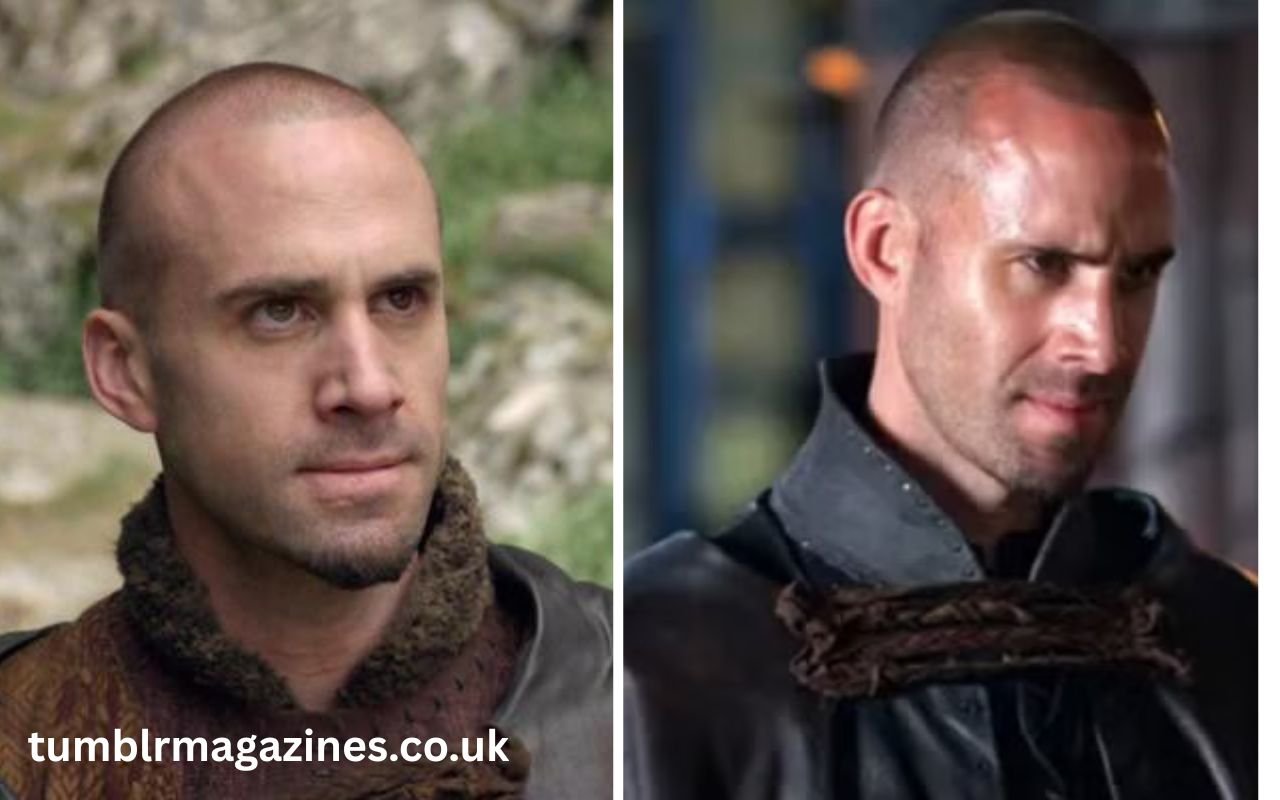
camelot joseph fiennes: as Merlin in Camelot: A Dark and Machiavellian Wizard for a New Generation
camelot joseph fiennes: In 2011, the Starz cable network unveiled a bold new retelling of the Arthurian legend with the series Camelot, a ten episode historical fantasy drama that sought to bring the ancient story to modern audiences with fresh energy and darker themes . At the heart of this ambitious production was acclaimed British actor Joseph Fiennes, best known to audiences for his Oscar nominated performance as William Shakespeare in Shakespeare in Love and his role in the science fiction series FlashForward. Fiennes took on the iconic role of Merlin, the legendary wizard and advisor to King Arthur, but his interpretation was unlike any that had come before.
The series was created by Michael Hirst, who had found success with the historical epic Spartacus for the same network, and Chris Chibnall, who would later become famous for running Doctor Who . Camelot was an Irish Canadian co production that filmed for six months in the stunning landscapes of County Wicklow, Ireland, bringing authenticity and visual grandeur to the medieval world . The ensemble cast also featured Jamie Campbell Bower as a young King Arthur, Eva Green as the sorceress Morgana le Fay, Tamsin Egerton as Queen Guinevere, James Purefoy as King Lot, and Clive Standen as Gawain . The series premiered with a special preview on February 25, 2011, before formally launching on April 1, 2011, and it earned a Primetime Emmy Award nomination for Outstanding Original Main Title Theme Music .
What set this production apart from previous adaptations of the Arthurian legend was its commitment to portraying a young, visceral, and politically charged tale of idealism, adventure, and romance . Rather than presenting a sanitized fairy tale version of Camelot, the series explored the brutal realities of power struggles, war, greed, and the difficult ascent of a pure king in a divided land. For Fiennes, this approach was precisely what drew him to the project. He was eager to tackle Merlin from a fresh angle, steering away from the tired tropes of the wise old man with a long white beard and instead creating a character who was morally complex, strategically dangerous, and deeply human .
Reinventing Merlin as a Dark and Machiavellian Figure
Joseph Fiennes made it clear from the outset that his Merlin would not be the kindly, grandfatherly wizard of traditional lore. In interviews promoting the series, he described his interpretation of the character as Machiavellian and bipolar, emphasizing that this Merlin was not to be trusted, even though he was ostensibly fighting for the cause of good . This duality was central to Fiennes’ performance. He explained that Merlin fights fire with fire, that he drives out a nail with another nail, and that he does not turn the other cheek. Rather than being a pure hero, Merlin is a brilliant strategist who manipulates people and events to achieve his vision of Camelot.
The actor elaborated that Merlin’s allegiance is very much up for interpretation throughout the series. While he is essentially working for the good, his methods are often questionable, and his power can be dangerous not only to his enemies but to those closest to him . Merlin believes in Arthur more than Arthur believes in himself, and he can foresee the threats to the young king more clearly than anyone else . However, he must constantly fight the dark nature of his own power and learn to harness it to bring forth a new Camelot. This internal struggle added a layer of psychological depth that elevated the character beyond the typical fantasy archetype.
Fiennes was particularly interested in the political essences of the piece, noting that while there would be elements of dark arts, including things disappearing and changing shape, the real magic lay in the political maneuvering . He described the series as a beautiful, riveting, romantic, sensational epic story that had never been told in quite this way before. The focus was on the birth of a legend, on power given to the wrong individuals, on a country split by war and greed, and on the ascent of a pure king with noble minds. This grounded approach to fantasy allowed Fiennes to deliver a performance that was less about showy magic tricks and more about quiet manipulation, strategic genius, and moral ambiguity.
A Young King Arthur and a Youthful Merlin
One of the most distinctive aspects of the Camelot series was its emphasis on youth. The producers deliberately cast a young actor, Jamie Campbell Bower, in the role of King Arthur, portraying him early in his journey toward kingship rather than as an established ruler . This decision allowed the series to explore Arthur’s growth, his mistakes, his insecurities, and his gradual transformation into the legendary leader of British myth. In keeping with this theme, the producers also sought a younger interpretation of Merlin, and though Joseph Fiennes was in his early forties during filming, he was significantly younger than the ancient wizards typically depicted in other adaptations.
Fiennes acknowledged this directly, stating that he got fired up by the idea of tackling Merlin from a fresher angle, with youth being a predominant factor . He noted that they were seeing a young King Arthur and thereby a youngish Merlin, an interpretation that opened up new dramatic possibilities. A younger Merlin is more physically active, more emotionally volatile, and more susceptible to the temptations that come with great power. He has not yet fully mastered his abilities, and he is still learning how to wield his influence effectively. This vulnerability made him a more relatable and unpredictable character than the all knowing, serene wizards of other stories.
The emphasis on youth also extended to the show’s visual design. Fiennes was determined to move away from the traditional cloak, staff, long beard, and pointy hat that had become hallmarks of previous Merlin incarnations . Through discussions with showrunner Chris Chibnall, the idea emerged that Merlin should be portrayed more as a warrior monk, a man coming to terms with his powers and learning how they can affect both himself and others. This aesthetic choice reinforced the character’s active role in the political and military struggles of the series, positioning him not as a distant advisor but as a hands on participant in the fight for Camelot.
The Complex Relationship Between Merlin and King Arthur
At the core of the Camelot series was the dynamic and often tense relationship between Merlin and the young King Arthur. Merlin was presented as the creator and custodian of the legend, the mastermind who orchestrated Arthur’s rise to power and who worked tirelessly behind the scenes to secure the throne for him . This made Merlin a kind of political puppet master, pulling strings and engineering events to ensure that Arthur would become the king that Britain needed. However, this manipulation created an uncomfortable power dynamic, as Arthur was never entirely sure whether he was acting on his own will or following Merlin’s carefully laid plans.
Fiennes described Merlin as being brilliant at getting people to believe what he thinks they should believe, coercing them into a vote which carries forward what he wants to happen . This talent for psychological manipulation was one of Merlin’s primary weapons, more powerful than any spell he might cast. He understood that true power lay not in magic but in the ability to shape public opinion, to win hearts and minds, and to create the conditions under which a just and noble king could rule. Yet this also made him a morally ambiguous figure, someone who was willing to deceive and manipulate even those he cared about in service of his greater vision.
The tragedy of Merlin’s character, as portrayed by Fiennes, was that he believed in Arthur even more than Arthur believed in himself . He could foresee the threats to Arthur more clearly than anyone else, and he knew what was at stake if Camelot failed. This foresight drove him to take extreme measures, to make compromises with his own conscience, and to push Arthur toward decisions that the young king might not have made on his own. The tension between Merlin’s vision and Arthur’s emerging sense of his own moral compass created some of the most compelling drama in the series, as the two men struggled to find a balance between destiny and free will, between guidance and control.
The Political and Magical World of Camelot
The world of Camelot as envisioned by Michael Hirst and Chris Chibnall was one of political intrigue, shifting alliances, and brutal warfare . This was not the romanticized Camelot of song and story but a gritty, dangerous world where power was seized and held through force of arms, where betrayal was commonplace, and where the line between good and evil was often blurred. Merlin operated within this world as a master strategist, using his intelligence, his knowledge of human nature, and his subtle magical abilities to guide events toward his desired outcome. Fiennes noted that the magic of the piece lay primarily in the political essences, suggesting that the most compelling conflicts were not between wizards casting spells but between factions vying for control.
Of course, there were also elements of dark arts in the series, particularly through the character of Morgana le Fay, played with mesmerizing intensity by Eva Green. Morgana was presented as a powerful sorceress who opposed Merlin and Arthur, using her magic to threaten the stability of Camelot. The clash between Merlin’s more restrained, strategic use of magic and Morgana’s raw, destructive power formed a central conflict of the series. Critics and audiences alike praised Eva Green’s performance, describing her as having great range and being the perfect choice for the role . The dynamic between Fiennes’ Merlin and Green’s Morgana provided some of the most memorable moments of the ten episode run.
The series also featured a strong supporting cast, including James Purefoy as King Lot, an antagonist who sought to destroy Arthur and claim power for himself. Clive Standen played Gawain, one of Arthur’s loyal knights, adding to the growing fellowship around the young king . The production spared no expense in bringing this world to life, with elaborate costumes, impressive sets, and stunning Irish landscapes serving as the backdrop for the drama. The six month shoot in Wicklow allowed the creators to capture a sense of authenticity and scale that distinguished Camelot from other fantasy productions of the era, immersing viewers in the Dark Ages setting of the Arthurian legend.
Production, Filming, and Ambitious Plans for Multiple Seasons
Camelot was an ambitious production from the very beginning, representing a significant investment by the Starz network, which had previously found success with the hit series Spartacus . The network was eager to capitalize on the appetite for historical and fantasy dramas, and Camelot seemed poised to become a flagship series alongside its bloody predecessor. The showrunner, Chris Chibnall, had planned for multiple seasons, envisioning an epic that would span years and trace the full arc of Arthur’s reign and the eventual fall of Camelot . The production shot in and around the Wicklow countryside for six months in 2010, utilizing the natural beauty of Ireland to create the illusion of a mythical Britain.
The casting process brought together an international ensemble of talented performers. Joseph Fiennes, fresh off his work on FlashForward, was eager to return to television with a role that challenged him and allowed him to explore new dramatic territory. Jamie Campbell Bower, known for his work in Sweeney Todd and the Twilight series, brought a youthful energy and vulnerability to King Arthur. Eva Green, whose previous roles included the psychological thriller Cracks, delivered a performance as Morgana that was widely praised by critics . The production also featured Claire Forlani as Igraine, Arthur’s mother, and Peter Mooney as Kay, Arthur’s loyal brother, rounding out the central family dynamics of the series.
Despite strong ratings for its debut and a dedicated fan following, Camelot was not renewed for a second season. On June 30, 2011, Starz announced that it was not going to order additional episodes, citing significant production challenges and, most notably, scheduling conflicts with some members of the cast, including Joseph Fiennes, Jamie Campbell Bower, and Eva Green . The demanding production schedule and the rising fame of the lead actors made it difficult to coordinate a return for a second season. This announcement disappointed fans who had invested in the story and its characters, and it left many story threads unresolved, raising questions about what might have been.
The Legacy of Joseph Fiennes’ Merlin
Although Camelot lasted only a single season, Joseph Fiennes’ portrayal of Merlin left a lasting impression on audiences and critics alike. Reviewers noted that Fiennes led the way alongside Eva Green, delivering some of the strongest acting in the series . His interpretation of Merlin as a morally complex, politically savvy, and occasionally dangerous figure offered a refreshing alternative to the benevolent wizard archetype. In an era of prestige television that demanded nuanced, flawed protagonists, Fiennes’ Merlin fit perfectly, appealing to viewers who were tired of simple heroes and villains and who craved characters with genuine psychological depth.
The series also benefited from the unique family dynamic that Fiennes brought to the role. His older brother, Ralph Fiennes, was simultaneously achieving massive success portraying the villainous Lord Voldemort in the Harry Potter film series . While Ralph Fiennes played one of the most famous dark wizards in popular culture, Joseph Fiennes played one of the most famous good wizards, creating an interesting parallel between the two brothers’ careers. Both took iconic magical characters and infused them with complexity and darkness, moving beyond simple categorizations of good and evil. Joseph himself acknowledged the connection, noting that while his brother played a wizard gone bad, he was exploring a wizard whose goodness was very much in question.
Today, Camelot remains a fascinating entry in the long history of Arthurian adaptations. It stands alongside productions like The Mists of Avalon, the British series Merlin, and countless film versions of the legend . For fans of Joseph Fiennes, the series represents an important chapter in his television career, following his work on FlashForward and preceding his later roles in American Horror Story and The Handmaid’s Tale. His Merlin was a bold reimagining that pushed the boundaries of how the character could be portrayed, influencing subsequent interpretations and demonstrating that even the most familiar legends can be made new when approached with creativity, intelligence, and a willingness to take risks.